
“Professional, kind, and helpful therapeutic massage”
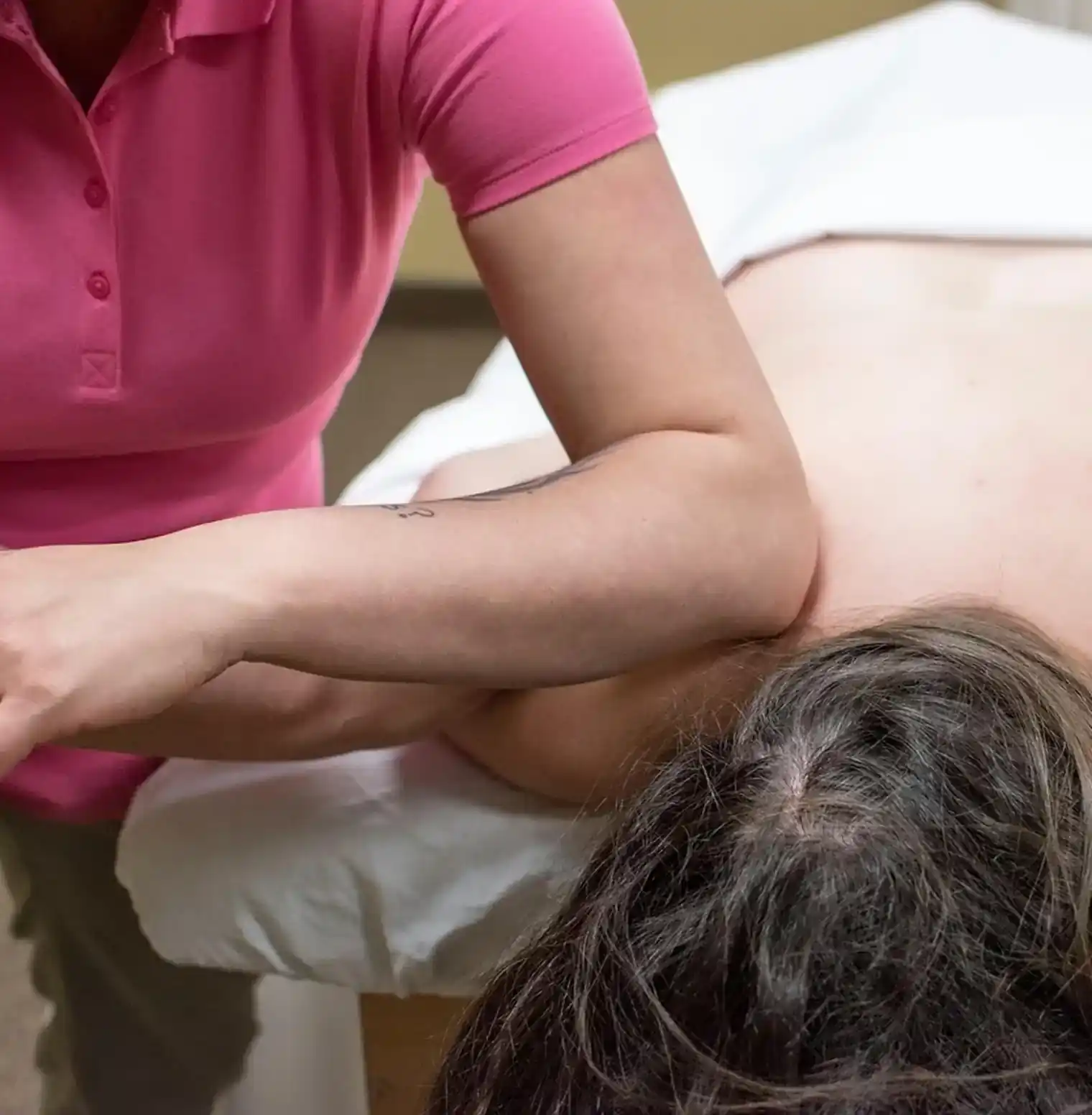
In-Home Myofascial Release
Slow, sustained pressure for stiffness and restricted movement, from a mobile massage therapist who comes to you.
View schedule
First Visit Guarantee: If we don't deliver as promised, your next session is on us.
What it is and who it is for
Myofascial release at home with a massage therapist.
Myofascial release uses slow, sustained pressure and gentle stretching on the fascia, the connective tissue that surrounds your muscles. The aim is to ease stiffness and help you move more freely, without the intensity of deep tissue work.
It suits patients with long-standing stiffness, posture-related pain from desks or driving, and anyone who finds firm pressure too much.
Most of our therapists offer this treatment.
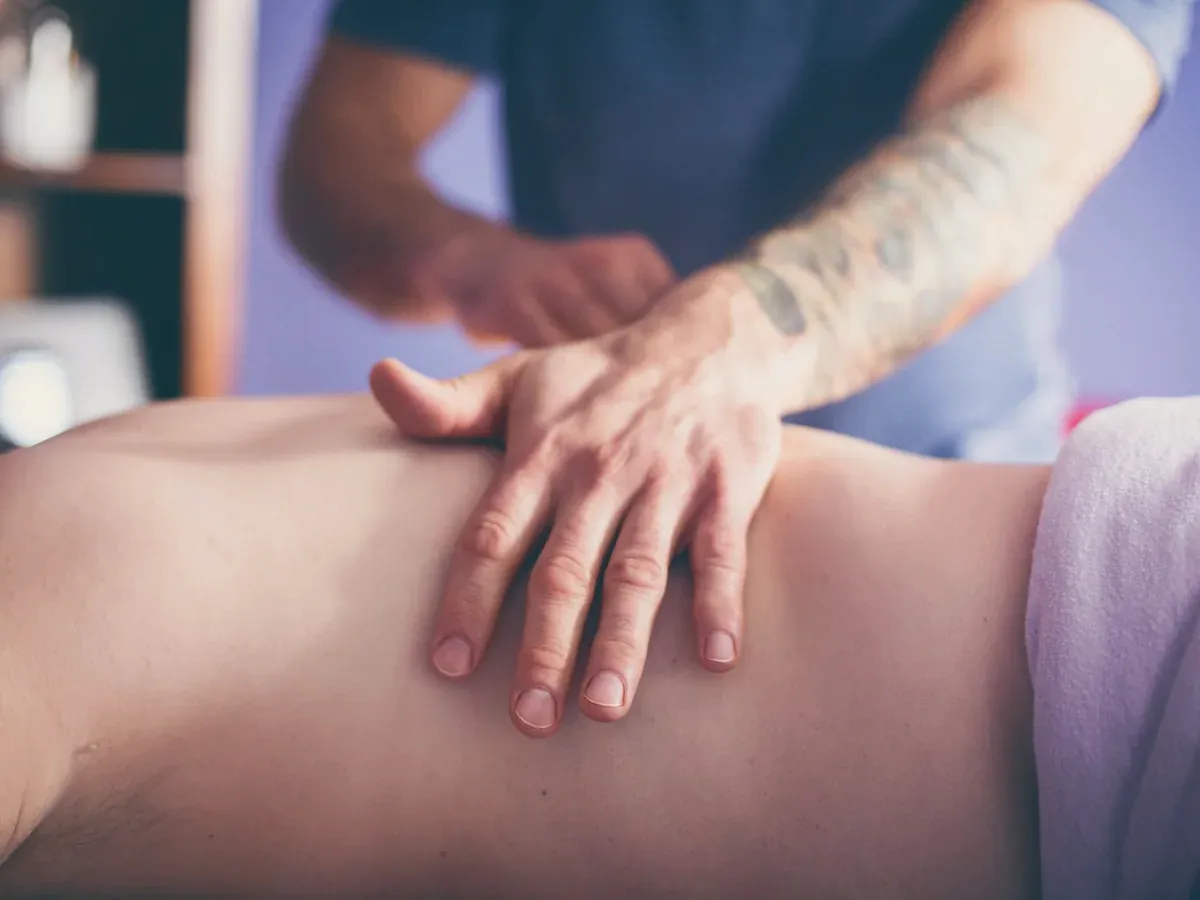
Why at home
Treatment in the comfort of your own space.
This work is slow and unhurried, and it is easier to settle into in your own space.
Afterwards, you can stay warm and still, or take a gentle walk, rather than sitting in a car.
What to expect in your session
What happens before, during and after your session.
- 1
Setting up
Your therapist arrives with a professional massage table and fresh linens. You need a quiet space about 7 feet by 4 feet.
- 2
Your health history
Before you begin, your therapist reviews your health history and may check how you stand and move.
- 3
During the session
Your therapist holds gentle, steady pressure on an area for longer than in other massage, often with little or no oil, then slowly follows the tissue as it eases. You may feel a stretch or warmth. It should not be painful.
- 4
Session length
Sessions are 60, 90 or 120 minutes.
Safety and suitability
Who this treatment suits, and when to adjust it.
This gentle approach suits most adults, including patients who find firm pressure uncomfortable. If you are pregnant, book prenatal massage instead.
Your therapist will avoid areas with a recent injury, burns, broken skin or active inflammation.
Check with your doctor before booking if you take blood thinners, have a history of blood clots, or have had surgery recently.
Massage therapists across Canada
Registered or certified, background-checked, ID-verified, insured and personally interviewed.

Arseniy
RMT · Swedish, Deep Tissue

Shunji
RMT · Swedish, Deep Tissue
Lokeshwara
RMT · Swedish, Deep Tissue

Krishantha
RMT · Swedish, Deep Tissue

Peter
RMT · Swedish, Deep Tissue

Jenai
RMT · Swedish, Deep Tissue

Haval
RMT · Swedish, Deep Tissue

Majidreza
RMT · Swedish, Deep Tissue

Gagandeep
RMT · Swedish, Deep Tissue

Tuqiang
RMT · Swedish, Deep Tissue

William
RMT · Swedish, Deep Tissue

Clint
RMT · Swedish, Deep Tissue

Kevin
RMT · Swedish, Deep Tissue

Lucy
RMT · Swedish, Deep Tissue

Skander
RMT · Swedish, Deep Tissue

Tariq
RMT · Swedish, Deep Tissue

Khang
RMT · Swedish, Deep Tissue

Vitaly
RMT · Swedish, Deep Tissue

Robert
RMT · Swedish, Deep Tissue

Nicole
RMT · Swedish, Deep Tissue

Shaneel
RMT · Swedish, Deep Tissue

Paul
RMT · Swedish, Deep Tissue

Edvin
RMT · Swedish, Deep Tissue

Samuel
RMT · Swedish, Deep Tissue

Natasha
RMT · Swedish, Prenatal

Bonnie
RMT · Swedish, Deep Tissue

Jagbinder
RMT · Swedish, Deep Tissue

Alexander
RMT · Swedish, Deep Tissue

Lana
RMT · Swedish, Deep Tissue

Frank
RMT · Swedish, Deep Tissue

Louis
RMT · Swedish, Deep Tissue

Gurinder
RMT · Swedish, Deep Tissue

Jason
RMT · Swedish, Deep Tissue

Justin
RMT · Deep Tissue, Myofascial Release

Anthony
RMT · Swedish, Deep Tissue

Joshua
RMT · Swedish, Deep Tissue

Yosuke
RMT · Swedish, Deep Tissue

Amritpal
RMT · Swedish, Deep Tissue

Pardeep
RMT · Swedish, Deep Tissue

Jiyeon
RMT · Swedish, Deep Tissue

Garth
RMT · Swedish, Deep Tissue

King
RMT · Deep Tissue, Sports

Darren
RMT · Swedish, Deep Tissue

Ranjeet
RMT · Deep Tissue, Swedish

Venetia
RMT · Swedish, Deep Tissue

Jaid'N
RMT · Swedish, Deep Tissue
Are you a registered massage therapist? Set your own hours and see patients near you.
See careersWhat our patients say
Reviews from patients after their sessions at home.
Insurance and direct billing
Most extended health plans cover registered massage therapy.
Registered massage therapy is covered by most extended health benefit plans in Canada. Most patients get 40 to 100% of their session covered.
Where your insurer supports it, ANVITA submits claims on your behalf, so you pay only what your plan does not cover. We direct bill 35+ insurers.
If your insurer is not set up for direct billing, you receive a detailed receipt after each session to submit for reimbursement. Coverage and referral requirements vary by plan, so check with your benefits provider.
Simple pricing
Most patients get 40 to 100% of the listed price covered by insurance. All taxes included.
Select your province to see pricing
Where we offer it
Our massage therapists treat patients at home in cities and neighbourhoods across Canada.
Common questions
Your questions answered.
What is fascia?
A thin layer of connective tissue that wraps around and between your muscles. When it is tight or restricted, movement can feel stiff.
How is it different from deep tissue massage?
Deep tissue uses firm pressure to reach deeper muscle. Myofascial release is gentler and slower, with sustained holds and stretches rather than strong pressure.
Does it hurt?
It should not. You may feel a stretching or warming sensation. Tell your therapist if anything is uncomfortable.
Can it help with posture-related pain?
It may help ease stiffness from long hours at a desk or behind the wheel. Your therapist may also suggest simple stretches to do between sessions.